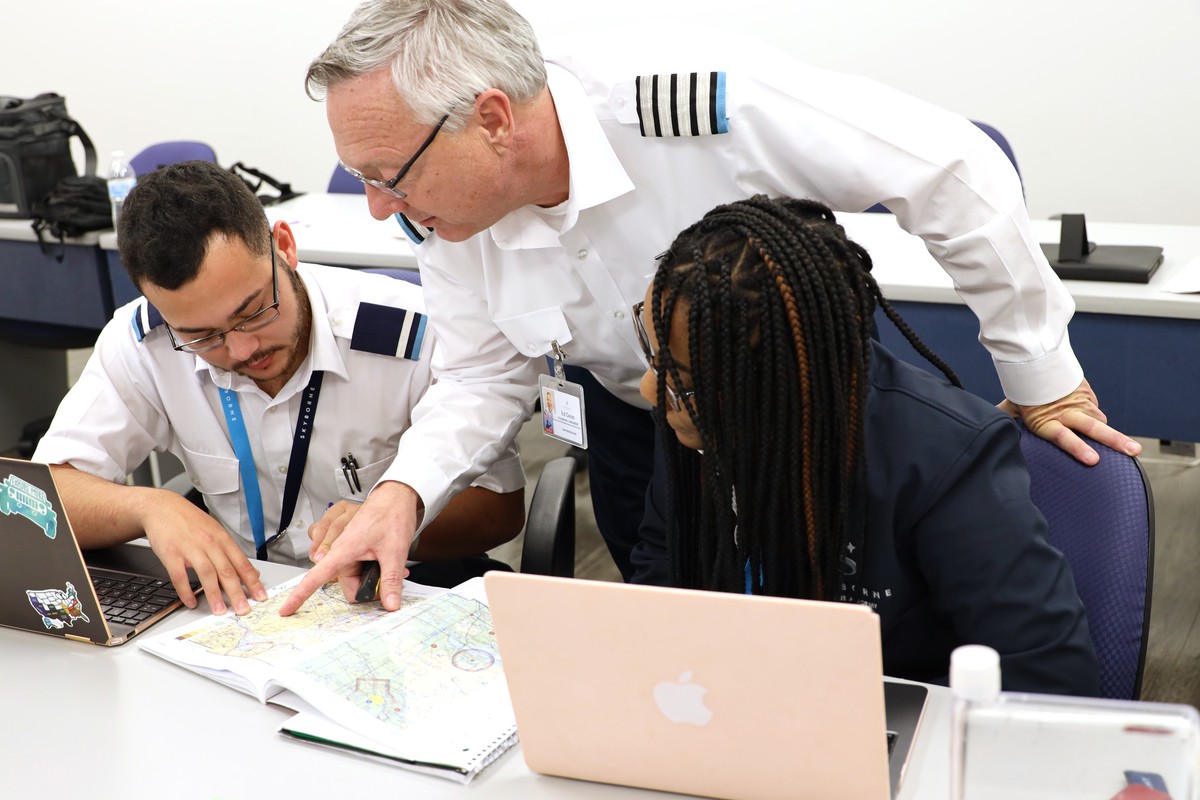
A Certified Flight Instructor (CFI) plays a central role in pilot training, shaping safe habits, strong fundamentals, and sound decision-making from a student’s very first lesson. For many professional pilots, becoming a CFI is also a valuable step in refining their own flying skills while building instructional experience that supports a long-term aviation career.
What is a CFI?
A CFI is a qualified flight instructor who has met the teaching and certification requirements established by the Federal Aviation Administration (FAA).
In this role, instructors teach student pilots both in the aircraft and on the ground, delivering structured, syllabus-based training designed to meet defined learning objectives.
CFIs guide students through each phase of training, from initial instruction through solo flight and preparation for practical tests.
Along the way, they help students develop sound judgment, cockpit discipline, and risk awareness—skills that become increasingly important as training progresses.
While every flight school operates a little differently, the core responsibilities of a flight instructor are consistent and typically include:
- Conducting pre-flight briefings and setting lesson objectives
- Teaching flight maneuvers and procedures in the aircraft
- Debriefing after each lesson and identifying next steps
- Supporting ground study and checkride preparation
- Tracking progress against a syllabus and maintaining training records
What are CFII and MEI?
As instructors gain experience, many choose to add additional FAA instructor ratings.
A CFII (Certified Flight Instructor – Instrument) authorizes an instructor to teach instrument flight training, while an MEI (Multi-Engine Instructor) allows instruction in multi-engine aircraft.
These additional ratings expand an instructor’s ability to teach across multiple phases of training and work with students at different stages of development.
Instructors also benefit by deepening their technical knowledge and gaining experience in more complex aircraft and training environments.
Why flight instruction can be a rewarding career pathway
Flight instruction offers a front-row seat to student progress—from early lessons to major milestones such as solo flights and checkrides.
Many instructors find that teaching sharpens their own flying skills, as effective instruction requires precision, consistency, and a strong understanding of standards.
For pilots who enjoy mentoring others and want a structured, hands-on aviation role, flight instruction can be a meaningful and rewarding stage of a broader aviation career.
Sponsored instructor opportunities
Some flight training organizations, including Skyborne Airline Academy, offer sponsored instructor opportunities for eligible pilots.
These programs provide a structured training environment and support from an experienced instructor team.
Pilots who join Skyborne as CFIs receive sponsorship for their CFII and MEI ratings, helping instructors expand their qualifications and progress into more advanced training roles.
To learn more about instructor opportunities with Skyborne, visit our careers page:
https://skyborne.com/us/skyborne-us-careers/
To speak directly with our team, visit our Contact page:
https://skyborne.com/us/contact-skyborne-today/