If you ask someone to imagine pilot careers, most people think of the traditional airline route. And while that’s a fantastic goal, it’s far from the only option.
Whether you are just beginning your career, ready for a new direction after time in the industry, or planning the next chapter beyond full-time flying, the skills gained during pilot training open the door to many rewarding pathways.
What pilot careers are available?
Throughout their training and flying careers, pilots build strong technical knowledge and decision-making abilities. These strengths translate into roles across flight training, operations, safety, commercial aviation, and corporate flying. Many pilots continue progressing within airlines, while others move into roles that offer greater stability, new leadership opportunities, or more flexible schedules. The industry provides a broad landscape of pilot careers, each suited to different goals and experience levels.
Flight Instructor
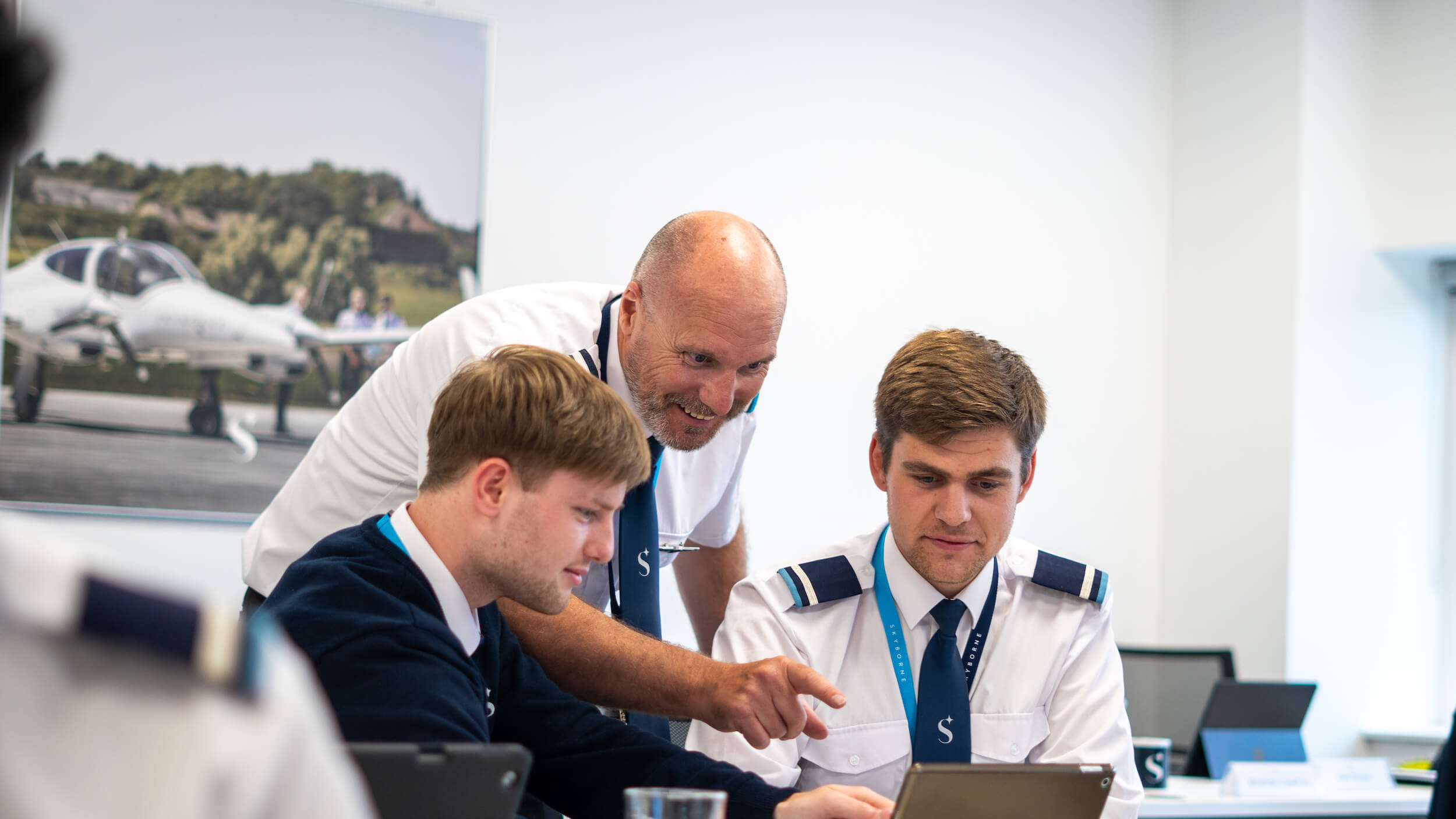
Becoming a flight instructor remains one of the most established and valued career paths in aviation. Instructors support trainees at each stage of their practical flying, from fundamental handling skills to advanced instrument procedures. Alongside teaching Private Pilot Licence (PPL), Commercial Pilot Licence (CPL), and multi-engine (ME) training, flight instructors help trainee pilots build confidence and apply what they have learned in real-world conditions.
The role is especially rewarding for pilots who enjoy working closely with those who want to learn and value a structured, hands-on position at a flight training school. It also provides opportunities to progress into senior instructor, examiner, and training management roles.
Theoretical Knowledge Instructor
Pilots who excel in explaining complex topics and enjoy a classroom setting often thrive as Theoretical Knowledge Instructors (TKIs). TKIs deliver ground school instruction across core ATPL subjects, including navigation and air law. These roles offer consistency and long-term development within an academy, with many instructors moving into subject leadership and wider training roles.
TKI positions also provide a meaningful way to support the next generation of pilots, making them a valued part of any pilot training journey.
Additional aviation pathways
Pilots can also transition into broader industry roles that draw on their operational insight, such as:
- Safety and compliance, supporting safety management systems and risk oversight.
- Operational control and dispatch, contributing to flight planning and aircraft performance decisions.
- Corporate and charter flying, offering varied missions and flexible scheduling.
- Training management, leading instructor teams and overseeing course delivery.
These roles support pilots in using and expanding their technical expertise and understanding of high-standard operations.
Shape your next step with Skyborne Airline Academy
Skyborne offers career opportunities for pilots at every stage, from new trainees to experienced aviators ready for their next move. To explore current vacancies, visit our Careers page.