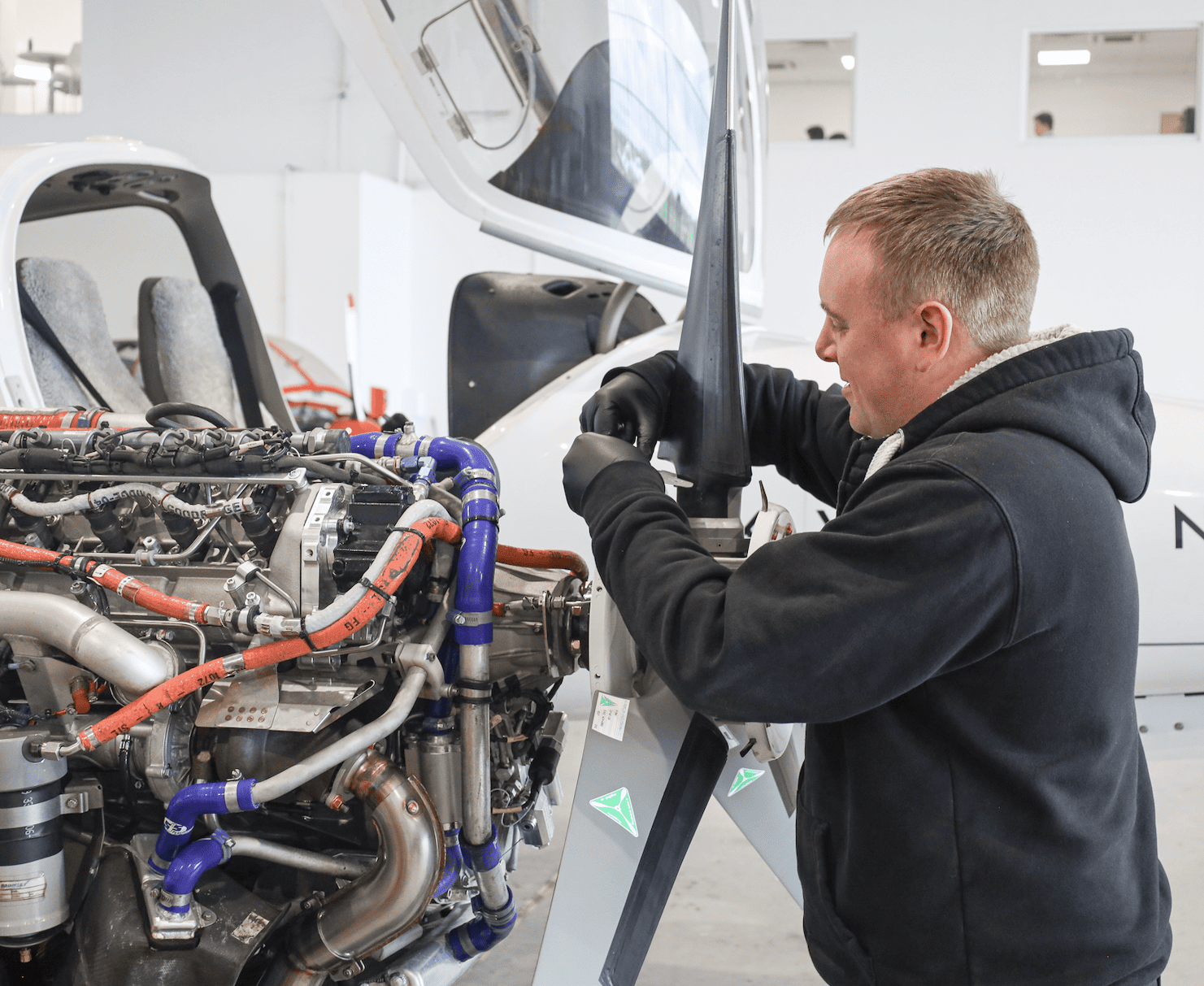
Working in aircraft maintenance at a flight training academy is a hands-on career where technical expertise meets real-world problem-solving. From routine inspections to troubleshooting unexpected faults, it’s a role that brings new challenges and plenty of opportunities to develop your engineering career. It also carries a significant responsibility for aircraft airworthiness, maintenance quality and the safety of trainees, instructors and colleagues.
At Skyborne, our in-house maintenance crew is an essential part of daily operations. So, what is it really like to be part of the team?
What does a typical day in aircraft maintenance look like?
At a flight training academy, a busy flying schedule brings a different pace to aircraft maintenance. With aircraft regularly taking to the skies, licensed engineers need to balance planned inspections with unexpected technical issues, all while maintaining the highest safety standards. Safety, airworthiness and compliance is always the highest priority.
As a licensed engineer at Skyborne, a typical day for you could involve:
- Scheduled maintenance: Coordinating inspections and servicing in line with the fleet maintenance schedule to minimise aircraft downtime, while ensuring work is completed to the required standard using current, applicable maintenance data and company procedures.
- Fault finding: Identifying and resolving defects through troubleshooting, repairs and component replacement. including investigating recurring faults and addressing their underlying causes.
- Aircraft-on-ground (AOG) support: Responding to technical issues that prevent aircraft from returning to service. with release dependent on satisfactory maintenance and the appropriate certification.
- Maintenance documentation: Maintaining accurate records, overseeing and certifying completed maintenance work, ensuring records are complete and traceable and that certification remains within the scope of your licence, competence and company authorisation.
- Safety and quality: Reporting hazards, errors and near misses, supporting audits and corrective actions, and contributing to improvements in maintenance practices.
- Safe working practices: Maintaining tool control, using appropriately calibrated equipment, checking component traceability and preventing foreign object debris, with additional inspections completed where required.
- Communication and handovers: Clearly recording work in progress, outstanding defects and aircraft limitations so that colleagues and flight operations have accurate information.
If you’re an experienced licensed engineer, it’s an opportunity to put your technical expertise into practice in a busy operational environment, while developing specialist knowledge of aircraft such as the Diamond DA42.
Continued technical development and human factors awareness are also essential to maintaining competence and recognising how fatigue, interruptions and workload can affect maintenance safety.
What makes working at a flight training academy different?
Unlike some other aviation environments, a flight training academy operates around a regular programme of training flights meaning aircraft availability plays an important role in keeping trainees on track.
At Skyborne, our in-house team works closely with flight operations to plan inspections and respond to unexpected faults, helping minimise downtime without compromising safety. Effective planning must allow sufficient time, resources and access to the correct tools and technical information for maintenance to be completed properly.
The role also calls for strong technical judgement and adaptability. Priorities can change throughout the day, and engineers need to assess issues efficiently while ensuring aircraft only return to service when they’re safe to do so.
Engineers must be supported in stopping work, escalating concerns or keeping an aircraft grounded whenever safety or compliance cannot be assured, regardless of operational pressure.
Skyborne operates a strong ‘Just Culture’, an open and fair reporting culture that is highly important. Engineers feel confident raising concerns and reporting honest mistakes, with lessons learned used to strengthen procedures and prevent recurrence. Quality is an ongoing team responsibility, supported by audits, SMS, feedback and effective corrective action.
But perhaps one of the most rewarding aspects is seeing the direct impact of your work.
Every aircraft you help keep flying supports the next generation of pilots as they build their experience and progress towards airline careers.
Could your next career move be at Skyborne?
If you’re an experienced, licensed engineer looking for a new challenge, working at a flight training academy could offer a different perspective on aircraft maintenance.
At Skyborne, you’ll have the opportunity to apply your existing skills, develop specialist expertise and work as part of a team that plays a vital role in training future airline pilots. The role requires professional accountability, attention to detail and a commitment to safe, compliant and consistently high-quality maintenance.
Ready to see where your engineering career could take you?
Explore our current UK vacancies and discover opportunities to join the Skyborne team.